
Whether it’s beeswax, carnauba wax or synthetic wax, wax fills the tiny depressions in a surface and changes how light refracts. The result is optical: the mark looks less noticeable, sometimes invisible from certain angles. The missing material, however, is still missing. Understanding this distinction helps you avoid confusing temporary concealment with lasting repair, whether you’re dealing with a solid wood piece of furniture or a car’s bodywork.
Existing finish and scratch depth: what wax cannot make up for
A scratch that affects only the varnish or stain remains superficial. Wax settles into it, fills the groove and evens out the reflection. Visually, the mark disappears—at least until the next cleaning or rub.
When the cut goes through the finish and reaches bare wood, the situation changes. The exposed grain absorbs wax differently from protected wood, which can leave a darker or duller patch than the rest of the furniture. Wax cannot replace missing material: it cannot restore the varnish layer or replace wood that has been gouged out.
With veneered furniture, there is even less room for error. Veneer is a thin layer of fine wood glued onto a substrate such as particleboard or MDF. Sanding to restore the finish risks going through this layer and making the damage worse. Wax may temporarily hide the problem, but any subsequent abrasive treatment becomes risky without advice from a furniture restorer.
If the original finish is unknown (oil, cellulose varnish or polyurethane), applying wax may alter the appearance or complicate future refinishing. Always test it on an inconspicuous area before applying it.
White marks and dark stains on wood: two different signs
Furniture owners often confuse these two types of marks, even though they call for different solutions. Applying wax to both in the same way means treating symptoms without first making a diagnosis.
A white ring usually indicates moisture trapped in the finish, not in the wood itself. A glass without a coaster, a hot cup or a damp object left in place too long: water or steam seeps between the layers of varnish. Applying wax over it may reduce the contrast, but the moisture remains trapped beneath the added layer.
A dark stain indicates that moisture has reached the wood. The grain has reacted, often through oxidation of the tannins. Covering the mark with wax makes it less visible without addressing the underlying problem. The wood will continue to deteriorate if the moisture is not removed.
We find that distinguishing between these two cases determines which method to use: for a white mark, certain techniques (gentle heat, lemon oil mixed with a fine abrasive) may be enough to draw out the moisture.
For a dark stain, localized stripping followed by lightening with oxalic acid may be necessary before refinishing. Car body scratches follow a similar principle: comprehensive car insurance may also cover the cost of paint repairs when a mark goes through the clear coat.
Wax on car bodywork: hide scratches without removing them
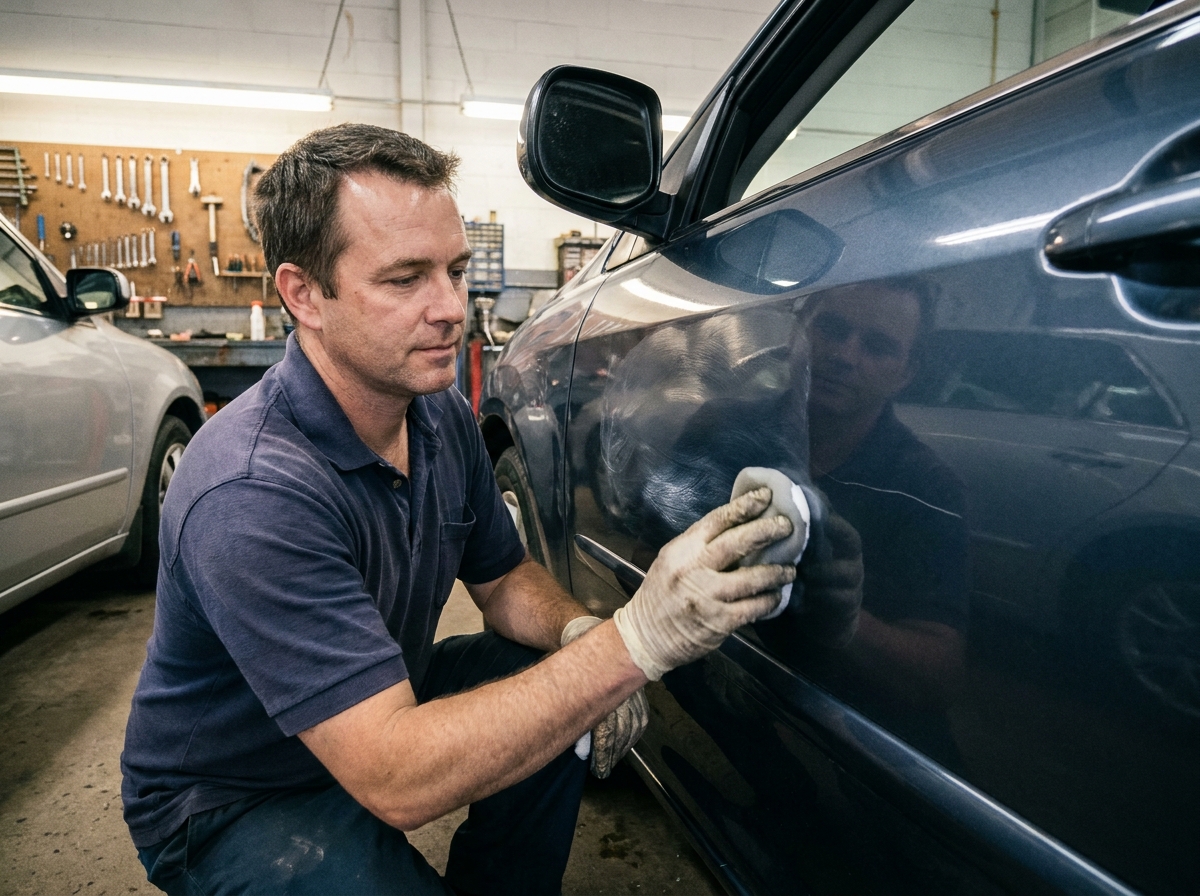
The same principle applies to car bodywork. Car wax, whether natural or polymer-based, fills micro-scratches in the clear coat and temporarily restores shine. Swirl marks and light scratches become almost invisible after careful buffing.
The problem arises as soon as the wax wears off, which can happen after a few washes or a few weeks of exposure to the elements. The scratches reappear, unchanged. For a lasting fix, the surface needs to be polished, removing a tiny amount of clear coat to level the area around the scratch.
A mark that has gone through the clear coat to the base coat or metal requires professional bodywork, with the insurer sometimes covering the cost of paint repairs.
Wax protects the existing clear coat but does not restore it. A regular maintenance routine (proper washing and waxing every three to four months) slows the appearance of new micro-scratches. It does not fix existing scratches that go beyond the surface layer.
How to decide between waxing and repair
Before applying wax to a mark, three checks can help you decide whether concealment is enough or more extensive work is needed:
- Run your fingernail across the scratch: if it catches, the mark goes beyond the surface finish, and wax will only make it temporarily less visible.
- Check the mark’s color under angled light: a white scratch on varnished wood or automotive clear coat indicates that only the transparent layer is affected. A scratch that reveals a different color (bare wood, gray primer or metal) signals deeper damage.
- Check the type of surface: thin veneer or a thin varnish layer cannot withstand corrective sanding, making wax tempting—and the only non-destructive option—but it still does not constitute a repair.
On surfaces where wax is enough (superficial micro-scratches or a slight loss of shine), the result can last for several weeks, provided you avoid harsh solvents when cleaning.
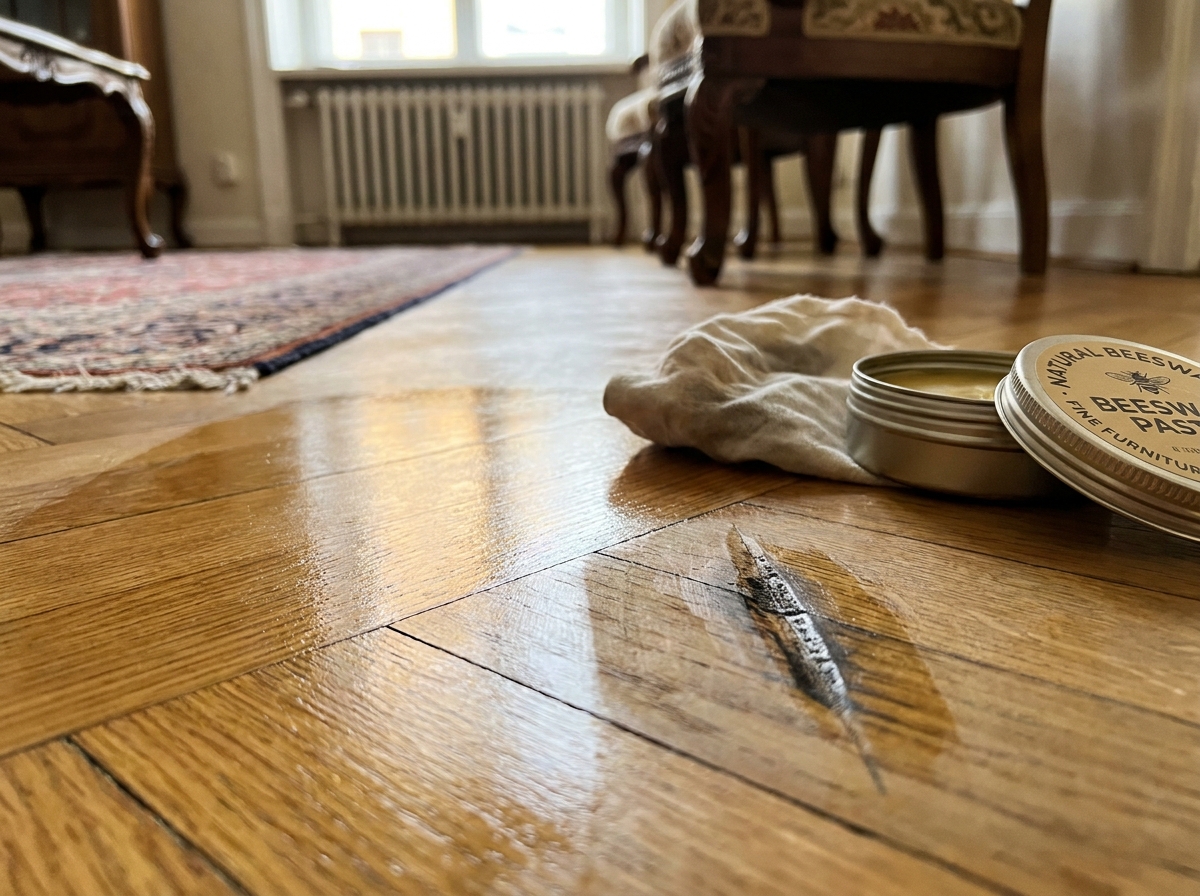
Routine care for waxed wood: avoid making existing marks worse
Waxed furniture accumulates layers over time. Each new coat of wax sits on top of the previous one, which can create a thick, sticky film that attracts dust and yellows over time.
Cleaning waxed wood with soapy water or a standard detergent partially dissolves the wax and leaves uneven patches. Standing water, even briefly, can seep into cracks left by marks and cause the rings described above.
For routine care, a dry or very slightly damp cloth is enough. We recommend dusting before applying wax to avoid trapping abrasive particles beneath the new layer, which can create new micro-scratches with every buffing.
Wax is a maintenance and protective product, not a repair product. On wood as on car bodywork, it acts as a barrier against moisture, UV rays and light friction. Confusing this role with that of filler, varnish or corrective polish leads to disappointment and, sometimes, to damage that costs more to fix than it would have to address from the outset.