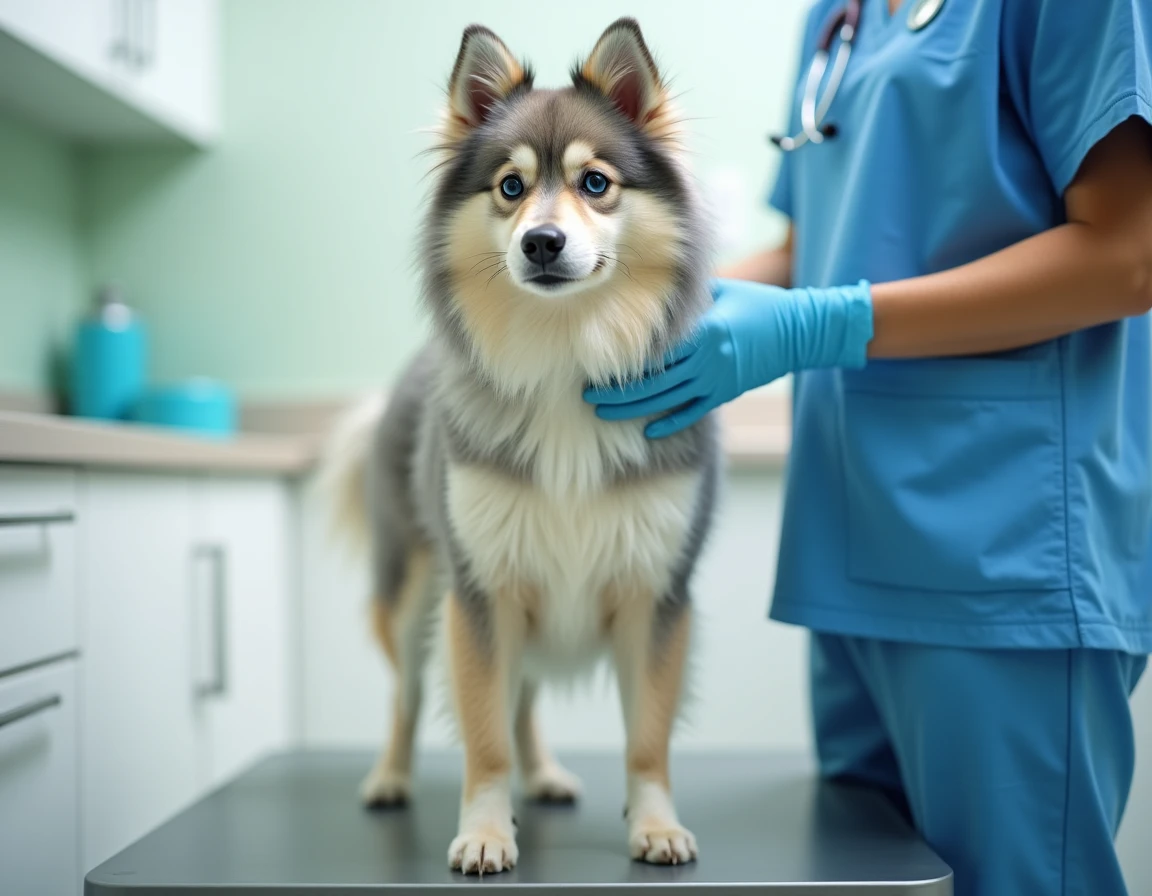
A two-month-old Pomsky weighing nearly 4 kg raises a direct question: will it exceed 15 kg as an adult, or stabilize well below that? The answer depends less on its current weight than on its generation, the size of its parents, and the type of crossbreed it comes from. The adult weight of a Pomsky remains one of the most challenging data points to anticipate among hybrid breeds.
F1, F2, F3 Generation: Why the Adult Weight of the Pomsky Varies So Much

There is often talk of a single weight range for the Pomsky, such as “small to medium.” This simplification masks a much more contrasting reality. The generation of the crossbreed radically changes the situation.
An F1 Pomsky (direct cross between a Siberian Husky and a Pomeranian) inherits very heterogeneous genes. The final size can be surprising in either direction. F2 and F3 (crossbreeds of Pomskies with each other) offer tighter ranges because breeders select the parents over several litters.
Some French breeders now display estimates by type and generation. A standard-sized F3b Pomsky weighs around 14 to 17 kg, while a toy female F3 Pomsky may stabilize around 5 kg as an adult. The gap between a toy and a standard often exceeds three times the weight, making any unique range without real predictive value. To delve deeper into these benchmarks, the growth guide on 4 Pattes d’Amour details the thresholds by category.
DNA Tests and Litter Tracking: Estimating the Adult Weight of the Pomsky Before Purchase
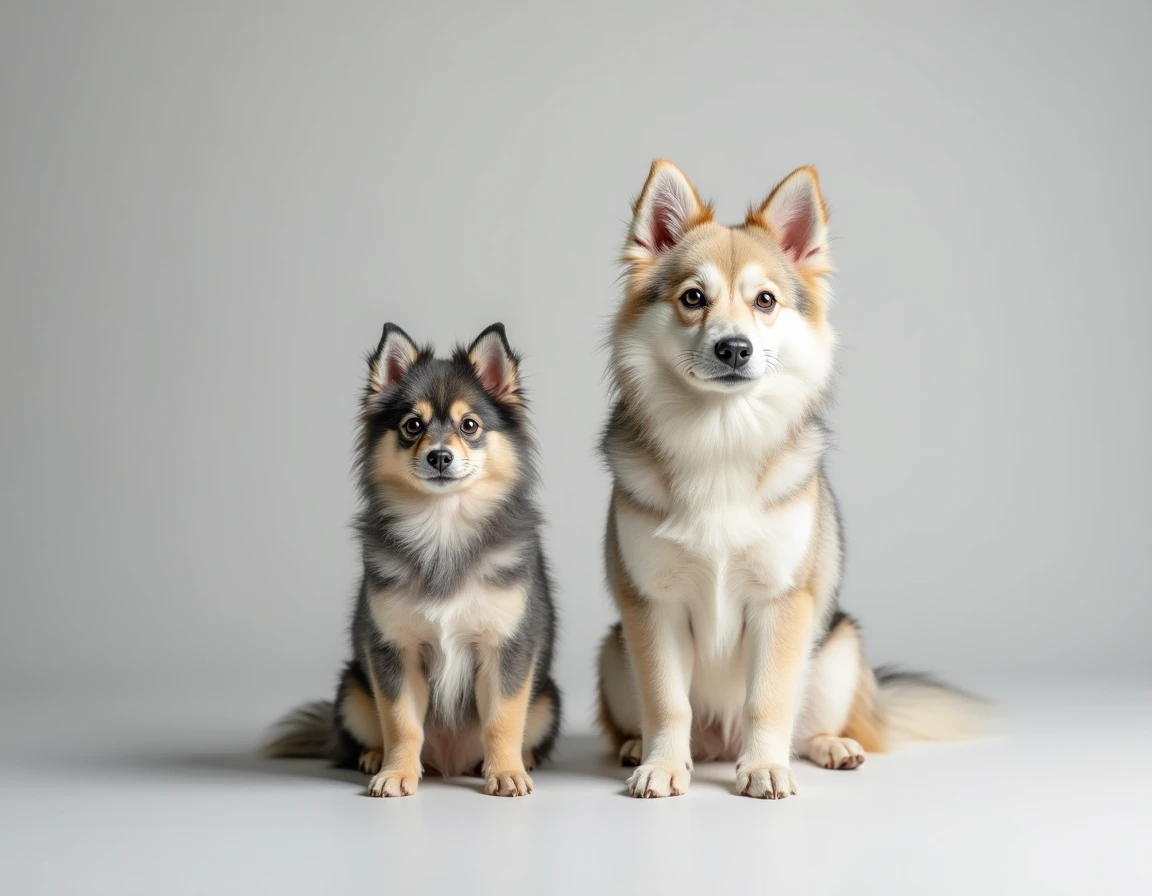
In owner groups, adult weights range from 5 to 16 kg for dogs all presented as “Pomsky 50/50.” The actual proportion of Husky and Pomeranian genes directly influences the size, and only a DNA test can confirm it.
Some breeders have begun to systematize these tests on their breeding stock. The principle is simple: by crossing the genetic profile with data from previous litters, the size prediction is refined. A breeder who keeps a growth chart for the first eight weeks of each litter can provide a much more reliable estimate than a simple visual observation of the puppy.
What to Ask the Breeder
- The weight of both parents and, if possible, the grandparents, to situate the lineage on the toy/mini/standard scale
- The weight curves of previous litters from the same parents, which serve as concrete references
- A DNA test for parentage and genetic profile, which secures the lineage and provides an exploitable Husky/Pomeranian percentage
Feedback varies on this point: some owners report a prediction very close to the final weight (within a kilo), while others notice a more marked discrepancy. The reliability largely depends on the quality of the tracking from the original breeding.
Growth Phases of the Pomsky: When Weight Stabilizes
The growth of the Pomsky does not follow a linear rhythm. Rapid weight gain is generally observed until four or five months, followed by a gradual slowdown. The majority of Pomskies reach their adult weight between 10 and 14 months, but standard sizes may continue to fill out slightly beyond that.
A puppy that already weighs a high amount at two months is not necessarily destined to become a large dog. The initial growth speed often reflects the quality of the mother’s diet and the size of the litter, not just the final size.
Practical Monthly Benchmarks
Rather than seeking a universal curve (which does not exist for this hybrid breed), it is beneficial to compare the puppy to data from its own lineage. A toy Pomsky that doubles its weight between two and four months follows a classic pattern. A standard that triples its weight in the same period remains within the norms.
Weighing the puppy weekly until six months allows for tracking its own curve and spotting any drop-off. A stagnation of more than two weeks or a sudden weight gain warrants a visit to the veterinarian.
Feeding and Overweight in the Pomsky: Adjusting the Ration to the Actual Size
The Pomsky often inherits the appetite of the Husky without having the energy expenditure. A 5 kg toy fed like a 12 kg dog gains weight quickly, and excess mass on a small joint structure poses real problems.
The daily ration is calculated based on the estimated target adult weight, not on the current weight of the growing puppy. A veterinarian familiar with hybrid breeds can adjust the amount of kibble based on the individual growth curve.
- For a toy or mini, split the ration into three meals until eight months, then switch to two
- Monitor the body condition score: you should feel the ribs without pressing, but not see them
- Limit treats during growth, especially if the puppy is following an intensive training program that multiplies food rewards
An adult Pomsky that is overweight by a few hundred grams may go unnoticed visually under its dense coat. The scale remains the best tracking tool, far more reliable than visual impressions.
The weight of the adult Pomsky is not a lottery if the right information is crossed in advance: generation of the crossbreed, weight of the parents, and growth tracking on the lineage. Breeders who document their litters and conduct DNA tests provide a solid foundation for anticipating size. After adoption, regular weighing and a ration adapted to the type (toy, mini, standard) are sufficient to stay on track.