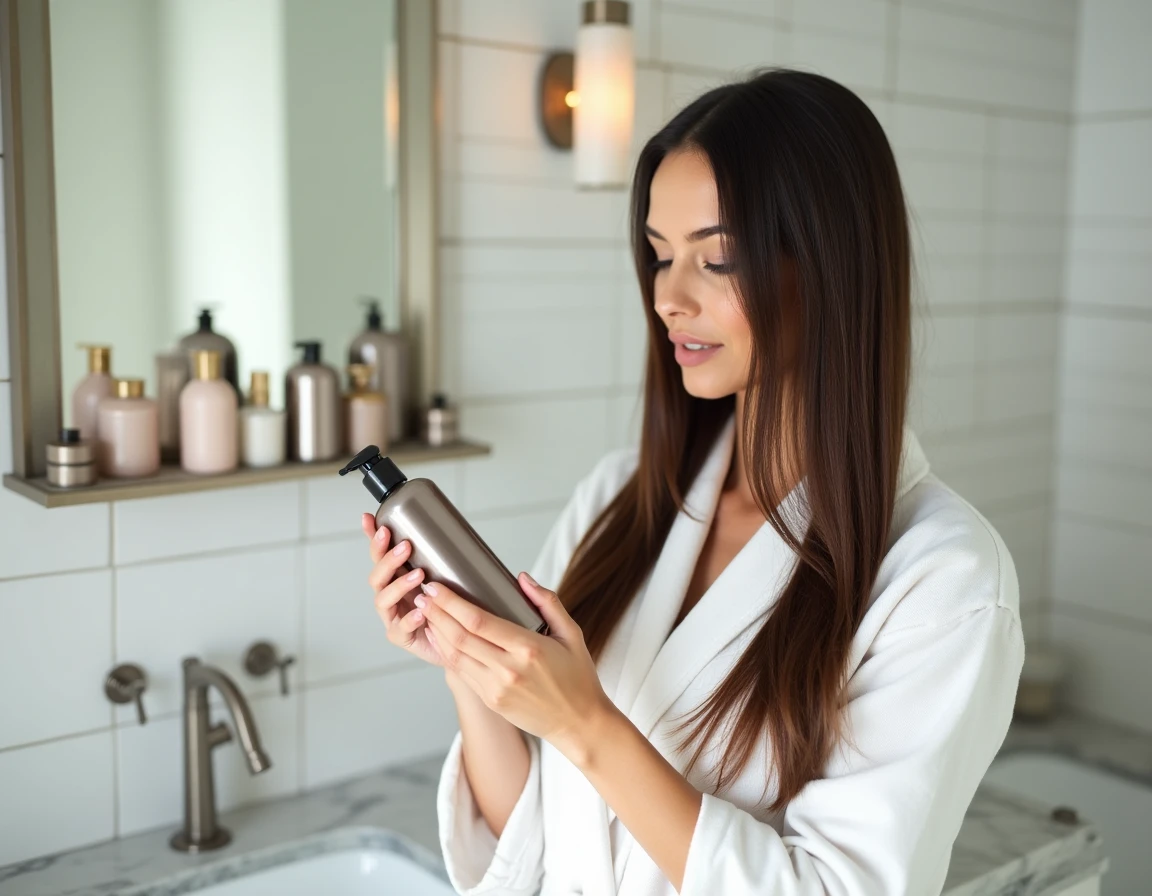
After a Brazilian smoothing treatment, the first shampoo poses a real practical problem: we wait several days without washing, then we find ourselves faced with an entire shelf of “sulfate-free” products without knowing which one will truly preserve the keratin deposited on the hair fiber. The choice of shampoo directly affects the duration of the smoothing and the quality of the hair in the weeks that follow.
Surfactants and pH of the shampoo: what degrades the keratin from the Brazilian smoothing
The Brazilian smoothing works by sealing keratin inside the hair cuticle thanks to the heat from the flat iron. A shampoo that is too stripping reopens this cuticle and expels the keratin, sometimes as early as the first wash.
Sulfate (sodium lauryl sulfate, sodium laureth sulfate) is the main agent to watch out for. Its high foaming power comes with the ability to dissolve greasy substances, including the protein film deposited by the treatment. We look for gentle surfactants like sodium cocoyl isethionate (SCI) or coco-glucoside, which cleanse without stripping the keratin.
The pH of the product also plays a often overlooked role. A shampoo with a pH that is too alkaline (above 6) lifts the cuticle scales. Formulas suitable for smoothing display a slightly acidic pH, between 4.5 and 5.5, which keeps the hair fiber closed and the treatment in place.
For more in-depth information, you can consult which shampoo to use after a Brazilian smoothing on Beauté Chic, which details the families of surfactants compatible with this type of hair treatment.
Sulfate-free solid shampoo after smoothing: an alternative gaining ground
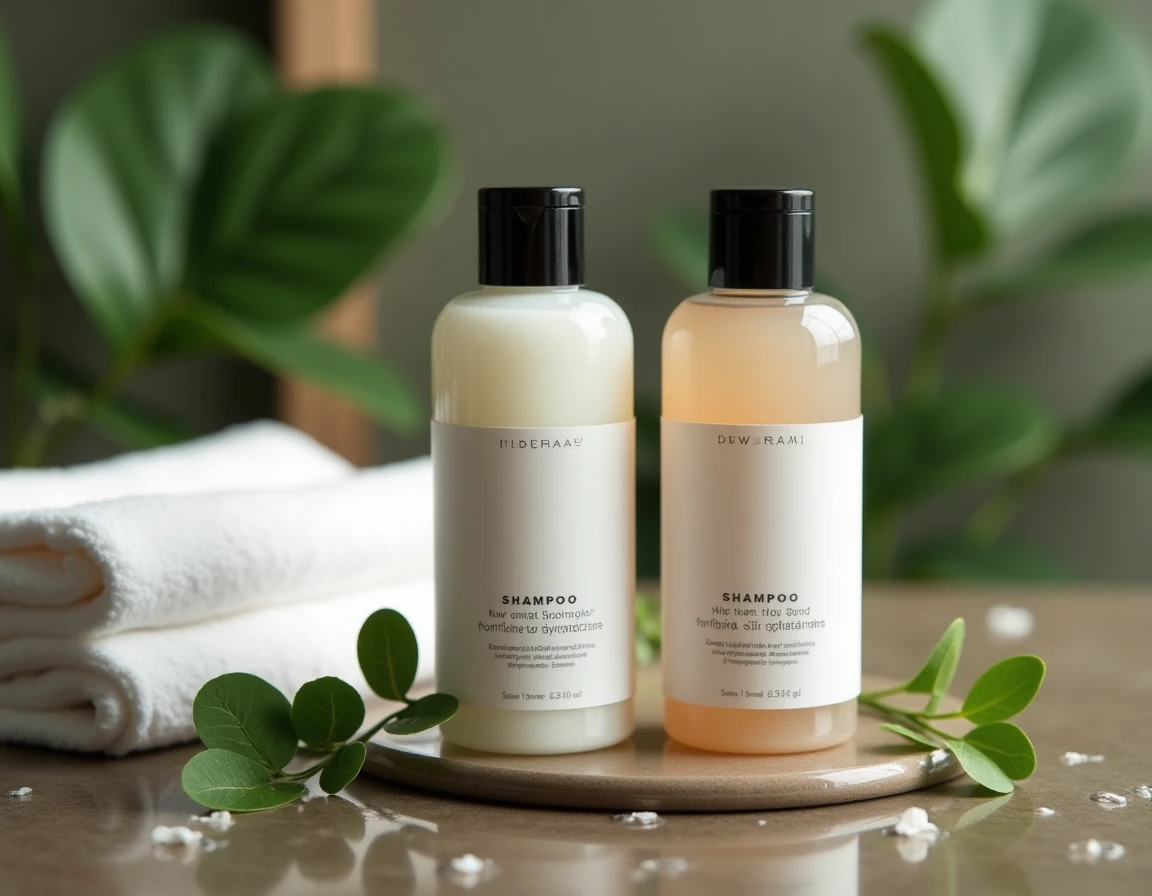
For a few years now, several European hair brands have been offering solid shampoos formulated without sulfates or aggressive surfactants, presented as compatible with keratin smoothing treatments. Hairdressers interviewed by the professional press confirm a growing adoption among clients concerned about reducing plastic packaging.
The solid bar is not automatically a good choice. For it to be suitable after a Brazilian smoothing, the main surfactant must be gentle (SCI, for example) and the pH checked. Some artisanal bars use a classic saponified base whose pH exceeds 7, which goes against the preservation of the smoothing.
Concrete criteria for evaluating a solid bar
- Check the INCI list: sodium cocoyl isethionate or cocamidopropyl betaine should be among the first ingredients, not sodium hydroxide alone
- Test the pH with a strip: between 4.5 and 5.5, the bar is compatible with a keratin treatment
- Avoid bars containing concentrated mint or citrus essential oils, known to dry out the smoothed hair fiber
Feedback varies on this point: some users find that rinsing solid bars leaves a residue on smoothed hair, especially in hard water. Adding a final rinse with vinegar water (one tablespoon of apple cider vinegar per liter) helps eliminate this deposit.
Post-Brazilian smoothing washing routine: frequency and important steps
The product alone is not enough. The way we wash our hair after a Brazilian smoothing weighs as much as the composition of the shampoo.
Spacing out washes without letting the scalp suffer
Reducing the frequency of washing prolongs the smoothing. Two to three shampoos per week represent a good compromise between scalp hygiene and keratin preservation. A dry shampoo between washes absorbs excess sebum without stressing the fiber.
When washing, the water temperature matters. Very hot water opens the cuticle, just like an alkaline pH. We favor lukewarm water during washing, then a cool water rinse to close the scales at the end of rinsing.
Application of the shampoo: technique and supplements
Apply the shampoo to the scalp, not to the lengths. The foam that descends during rinsing is enough to clean the ends. Rubbing the lengths accelerates the erosion of the keratin treatment.
After each shampoo, a keratin mask or conditioner closes the cuticle and compensates for the slight loss of proteins related to washing. Leave it on for a few minutes on the lengths before rinsing with cool water.
Ingredients to look for and avoid on a post-smoothing shampoo label
Reading an INCI list takes thirty seconds and avoids weeks of regrets. Here are the concrete guidelines:
- Avoid: sodium lauryl sulfate (SLS), sodium laureth sulfate (SLES), high concentrations of sodium chloride (it dries and can swell the fiber), aggressive parabens
- Favor: hydrolyzed keratin (reconstitutes the protein film), argan oil or coconut oil (nourishes without weighing down), silk proteins (smooth the cuticle), panthenol (deeply hydrates)
- Silicone divides opinions: it coats the hair and gives a smooth appearance, but some insoluble silicones accumulate over washes and weigh down the fiber. We prefer volatile silicones (cyclopentasiloxane) or silicone-free formulas
A shampoo that meets these criteria protects the Brazilian smoothing for several weeks and limits frizz between salon visits.
The choice of shampoo after a Brazilian smoothing boils down to three quick checks: gentle surfactants at the top of the INCI list, an acidic pH, and the absence of sulfates. Combined with appropriate washing practices (lukewarm water, application to the scalp, regular keratin mask), the right product allows for smooth and nourished hair well beyond the first month.